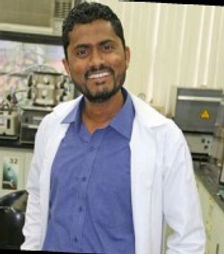
Our Research and Research Group
We specialize in the production of novel biomaterials by recycling waste materials for biomedical applications. The laboratory is also involved in the development of several water purification, wound healing, and other biomedical technologies designed for the purpose of social aid. We are also pursuing research in computational biology.
Thrust Area

Tissue engineering allows the repair or regeneration of cells, tissues, and organs that have lost their function due to disease, injury or congenital defects. This engineering approach in medicine offers remedy to existing problems through the delivery of stem cells and bioactive molecules onto a dimensional (3D) artificial extracellular matrix (bio-scaffold) prepared from either natural or chemically synthesized biocompatible and biodegradable materials (biomaterials). It may be either metallic, polymeric, ceramic, or composite. The wide range of natural polymer and ceramic resources is still to be unveiled as biomaterials for tissue engineering applications.
My research area deals with the processing and modification of silk fibroin from Bombyx mori, double-layered eggshell membrane, hair keratin, eggshell, crab shell, and adding more to the list for the development of bioscaffolds. The fabrication of 3D scaffolds with macro/micro porous architecture with nanoscale biopolymers and bioceramics by solvent casting-particulate leaching and freeze-drying methods have been employed in my research, however, efforts are being made towards electrospinning and 3D organ printing. The developed promising bioscaffolds have been further studied with mesenchymal stem cells (stem cell research) derived from peripheral and umbilical cord blood for bone and cartilage tissue regeneration. The influence of introducing bioactive molecules (metal ions, molecules, nanomaterials) on the induction of stem cell proliferation and osteogenesis is a key objective of my research.
Nanotechnology is contributing remarkably towards my research for the development of biomaterials with nanoscale topography or fibers to induce cell proliferation in a particular fashion and direct towards cell differentiation of interest. Many of these natural polymers and ceramic biomaterials also exhibit an affinity towards heavy metal ions and thus processed and modified eggshell membranes and hair keratin are deciphered for water treatment (environmental engineering). The treatment of polluted drinking water and wastewater from industries could be well treated for the removal of heavy metals with a developed biopolymeric system. Efforts are being made to fabricate such filters in an economical, reusable, and readily available form for wide applications without any side effects on human and environmental well-being.


Facilities
-
SDS-PAGE
-
Hot air oven
-
Hybridization Incubator
-
Centrifuge
-
Muffle Furnace
-
High-Performance Liquid Chromatography (HPLC)
-
Gas Chromatography (GC)
-
Autoclave
-
Analytical balance
-
pH meter
-
-80 C cryo-freezer
-
Liquid Nitrogen Cryocan
-
Dark room for plant cell and tissue culture
-
Rheometer
-
Attenuated Total Reflectance Infrared Spectroscopy (ATR-IR)
-
X-Ray Diffraction (XRD)
-
Lyophilizer
-
Field Emission Scanning Electron Microscope (FESEM)
-
CO2 Incubator
-
Vacuum Oven
-
Gel Dock
-
Rotary Evaporator
-
Over Head Stirrer
-
3D Printer
For other instruments and analyses, we have strong collaborative ties with several state-of-the-art research labs in India.
Funding